
£760,000 and Out
The 5 questions every relationship, partnership, business and community must answer

Happy Old Year!
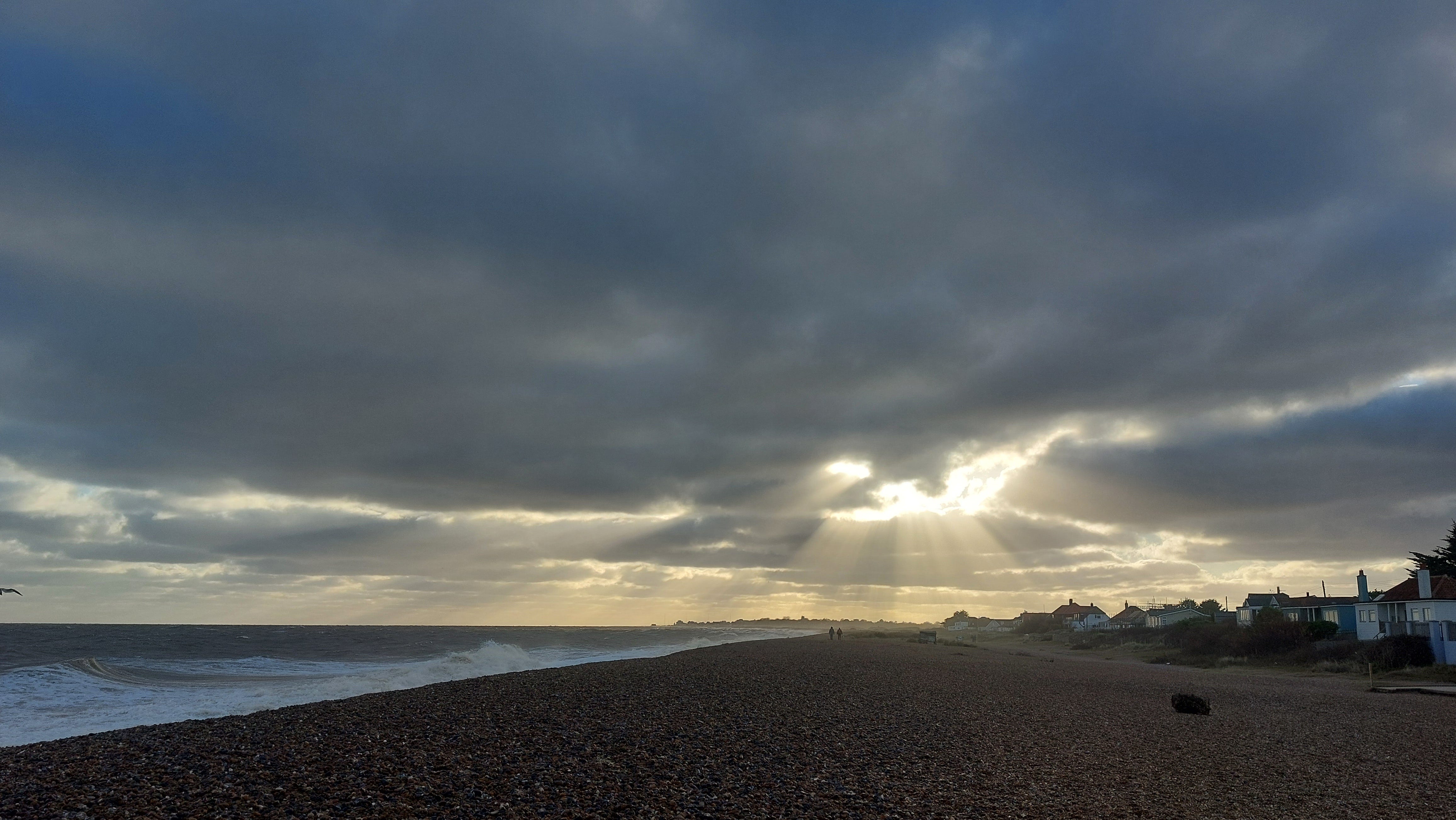
And a warm welcome from The Ness, where the sea is loud and the beach is stony.
For those of you new around these parts, welcome 👋 My name is David and I’m a writer, outdoor instructor, cyclist-at-large with Thighs of Steel, half of the team behind BBC Radio comedy Foiled, Expeditions Manager at British Exploring Society, and Advanced Wilderness Therapeutic Guide (in training).
Yes, that is too many hats.
In this newsletter, I write stories that help you and me understand the world (and ourselves) a little better.
In 2026, this newsletter will undergo a quiet metamorphosis: a butterfly that, each week or so, alights on a different leaf, inviting you into deeper connection with yourself, with others, and with the natural world around you.1
But, for now, we’re still here in good ol’ 2025.
It’s been a wonderful year in my life for new beginnings. But also a reminder that, sometimes, good things come to an end.
Goodbye Thighs
Some of you best know me as one of the minds and legs behind refugee solidarity and fundraising bike ride Thighs of Steel.
It is with mixed emotions — mainly relief at this point — that we announced the closure of Thighs of Steel. We haven’t ridden together since the stormy summer of 2023 and we won’t be doing another ride.
Thighs of Steel was the defining act of my professional career and is the platform for everything I do from here on out.
I first joined the ride on its third edition in 2018, riding from Ljubliana to Sofia with a raggle taggle collection of some of the best humans I’ve ever met — few of whom classed themselves as ‘proper cyclists’.
I had found my community.
£760,000 And Out
Thighs of Steel met adversity with action — far beyond the stories, songs and sweets we shared for the hills.
Together, we helped to bring thousands of people’s attention to the systematic abuses suffered by displaced people living on the violent borders of Europe.
With these people’s attention came their care. I’m still amazed that our little community raised over £760,000 for solidarity projects primarily run by refugees for refugees.
That is £760,000 transferred from some of the most privileged people in the world, those like us with homes and lives in peaceful European countries, to some of the most disenfranchised, fleeing the lives and homes they loved and cherished.
For five years, my participation with Thighs of Steel was something I was incredibly proud of.
Then, in 2023, it became way too fucking hard.
The Bear Hug of Success
In some ways, the ride was a victim of its own success.
Year after year since 2016, Thighs of Steel built a reputation for bringing together team after team of brilliant humans to do challenging bike adventures in a supportive environment that became almost cult-like.
If you were in, you were in. And, boy, did it feel good to be in.
But with the popular explosion in adventure cycling after the pandemic, and with our social media accounts pumped up by our ‘Refugees Welcome’ world record attempt in 2021, our reach extended far beyond our friends and their friends.
2022’s ride from Glasgow to Athens was a huge hit. Sunny weather followed us for two months, all the way from Kelvingrove Park to Mount Lycabettus.
Every week’s worth of cyclists brought a giddy wave of positive energy that catapulted us over every mountain range and into the generous arms of every host along the road.
Better yet: we raised more money than ever before for grassroots refugee projects in Greece and the UK.
Word got around.
In 2023, we sold out the ride in record time. Expectations were high.
In the cloudless summer of 2022, exceeding expectations was hard fought, but achievable.
In 2023, the weather — literally and metaphorically — turned on us.
Expectations, so jubilantly won, became a strangling bear hug, too much for our small community to hold in rolling thunder.
Flood, Sweat and Tears
The first rumblings of discontent came from the insurers.
A big claim the year before (not by us) had made the whole outdoor insurance industry jittery. I spent days on the phone trying to find someone to insure the ride — even looking into setting up our own security fund. No dice.
In the end, the insurers came through. I’m not sure they liked us, though.
They would’ve liked us even less if they truly understood what we were doing out there: novice cyclists, on unserviced bikes, on sometimes unpaved roads, on unresearched routes, through a dozen countries, wild camping, on two hours’ sleep, in forty degree heat, in ferocious storms.
We left Glasgow in the rain. It didn’t stop raining that summer. It didn’t stop.
By the time we reached Greece — forget the ride — a once-in-a-generation storm had swept away the lives and livelihoods of the people living on the fertile floodplains of Thessaly.
One of our cyclists was badly hurt on the first day, a bolt of unseen metal puncturing his calf.
A few weeks later, our planned route mistakenly led cyclists along what eventually petered out into a narrow goat track, up the cliff edges of an Italian Alp.
Later that same day, another cyclist’s brakes failed on the descent. She went over a cliff and was extremely fortunate that the impact that broke her collarbone didn’t break her neck.
There were multiple outbreaks of a stomach bug.
It was really hard. Hard for me, as the only company director on the ride, to bear the responsibility of everything that could go wrong on such a venture, not to mention the genuine responsibility for the things that had gone wrong.
But we made it. No one died. Most people had a good time. Together, our tireless community of cyclists raised over £100,000 for refugee solidarity projects.
Phew.
Then, the day after we arrived in Athens, exhausted and relieved to be going home, we got a call from our partner charity.
A cyclist, who two months before we had refused entry to the ride, was making a formal complaint of discrimination against us.
This person had themselves been a refugee: who were we — a bunch of middle class white folk — to exclude them from a ride supposedly organised in solidarity with refugees?
What Is This All About?
I won’t go into the details of the complaint. That’s not what today’s story is about.
(If you want to read the whole 3000+ word explanation about why Thighs is closing, you can do that here.)
Today’s story is about disagreement and learning to disagree well.
It’s about how you can learn from what we didn’t do.
It’s about what I will do next time.
I want to give you a framework that will prepare you to move forward when the inevitable happens and you disagree strongly with friends, family, colleagues, partners — disagreement that is simply irreconcilable, when your unstoppable force meets their immoveable object.
What We Did — or What We Didn’t Do
When we got back to the UK after the 2023 ride, Thighs of Steel entered into a facilitated resolution process with the cyclist concerned, which evolved into a drawn-out process of organisational soul-searching.
How, if at all, could Thighs of Steel move forward from here?
We spent over a year trying to find a solution and we failed. We failed because we fundamentally disagreed on what values should guide our solution.
Some of the team believed in an absolute restructuring of Thighs with anti-racism at our core, starting from our foundations and questioning our structures and processes to find where systemic injustices are being replicated within our organisation.
In practice, this approach would mean either replacing ourselves as organisers or closing the organisation.
Others — myself included — believed in a more incremental process of improving procedure and increasing inclusivity, building on how Thighs has operated in the past and integrating anti-racist principles as we went along.
In practice, as a small community with limited resources, this approach would mean compromising on inclusivity and risking only paying lip service to our anti-racist ideals.
Neither of these approaches is right or wrong, but with two opposing values on how to approach a solution, our conversations came to a standstill and, as so often happens with voluntary or part-time labours of love, bills needed paying and lives moved on.
In the absence of any forward resolution, our only fallback option was closure.
No right, no wrong, but, strange as it may sound, our irreconcilable differences were foreseeable and, indeed, inevitable.
If not this grievance, if not 2023, then something else, some other year.
Our differences were baked into how we set up the organisation. Or rather, in how we did not set up.
And this is where I can help you today.
Guided By Vibes Values
Thighs of Steel was always guided by vibes.
Our only published mission was to ‘ride really far for good reason’.
The ‘good reason’ was fundraising for a charity that distributed funds to grassroots refugee solidarity projects across Europe.
I think everyone involved would say that Thighs of Steel was so much more than either of these two public statements. But that’s all we had to fall back on, all that was ever set out on tablets of stone or pixels of internet.
We never codified our community values and never wrote up how we rode together. We never had any standard operating procedures or any of the other bits of paper that hold communities and companies together when the going gets tough.
We were friends, first and foremost, and we organised bike rides for our friends, first and foremost.
We certainly didn’t have a plan for what to do when we strongly disagreed with each other.
You don’t need to make that same mistake.
Here’s what you can do instead — here’s what I will do next time.
And, by the way, this isn’t just for organisations like Thighs of Steel. This works just as well for any relationship where you might have a strong disagreement at any point in your lives.
In other words: every worthwhile relationship.
How Do We Disagree?
Find a quiet moment with you and your colleagues, partners, family.
Ask yourselves these five questions:
1. What core values are non-negotiable for everyone?
Name them explicitly, in precise language that you all understand. You want something solid you can all hold onto in a crisis, not bubble bath.
Accept that deciding core values at the start of a venture will exclude some people from the beginning, but at least they can see where the lines are drawn.
Core values pass all three of the following tests — anything else is at most only a supporting value:
Identity: ‘If we lost this, we would no longer be us.’
Decision‑guiding: ‘We are willing to sacrifice time, money and/or status to uphold this.’
Existing practice: ‘This is central to how we already make sense of our actions.’
Aim for 3-5 core values. If you have more, can you cluster them together? If you have fewer, something is probably missing. Ask yourself or ask others: what makes this organisation or community truly special?
For each value, write a short definition, illustrated with 3–5 ‘this looks like / does not look like’ behaviours.
How this would’ve helped us at Thighs of Steel: Which do we value more highly: inclusion or action?
2. What is our shared vision? What is our ‘destination’?
This vision should be:
Brief.
Clear.
Future‑oriented.
Challenging.
Stable over time.
Inspiring.
Image-rich.
How this would’ve helped us: Is our vision to have a ride that is genuinely open to all, or to maximise fundraising for other refugee-led solidarity projects?
3. What is our shared mission?
Who do we serve? Who are our stakeholders, customers, communities?
What are we creating together? What are our products and services, what needs are we addressing, what problems solving?
How do we do what we do? What is our core approach, what are our distinctive capabilities? How do our values look like in action?
How this would’ve helped us: Are our primary stakeholders refugee cyclists or refugee-led solidarity projects? Are we solving the problem of funding for grassroots refugee solidarity projects, or are we addressing a need for cyclists to go on adventures that also do good? Is wild camping core to our approach, or not?
4. When our values collide — and they will — how do we decide what to do next?
Consensus? And what happens when we can’t reach consensus?
Majority? And what happens to the minority?
Minority? For example a Senior Leadership Team or Trustees.
Designated ‘boss’ decision-maker? And how do we sense-check tyrants?
Or do we pause and seek external support? In which case: who?
How this would’ve helped us: When we got stuck, how do we make and enact a decision to move us forward? Forget what to decide — we didn’t even really know how.
5. If all else fails, how will we make sure we end well?
How and when will we decide to end? Who has that authority? What if only one person thinks time’s up?
How will we share the difficult emotions around disagreement and closure to ensure there is no lasting unresolved or ill feelings?
Who takes on the administrative and practical tasks around closing? Who is legally responsible?
What do we want our stakeholders and the outside world to understand about our ending? What should not be said publicly, out of care for those involved?
Will we mark the ending? How?
How this would’ve helped us: A clear ending process would have helped us structure a difficult decision and distribute the responsiblity.
How These Questions Help You
Ultimately, all five of these questions are designed to give you and your co-conspirators a heap of tools to help you make decisions when things get hard.
They won’t make the hard decisions any less hard to take, but they will remove a lot of emotional labour and uncertainty out of the process of taking those decisions.
Hopefully these questions will keep you together, but if they don’t, at least you will know why and at what point to go your separate ways, without regret.
Ultimately, what I’ve learnt from the past two years is that vibes aren’t enough to keep a good thing going. We need the framework, provided by our answers to these five questions, to hold our hardest disagreements.
Thank You
Huge thanks to all the paying subscribers who helped make this story possible. You know who you are. Thank you. 💚
If you enjoyed this one, then go ahead and tell me. It’s the only way I’ll know. You can tap the heart button, write a comment, share the newsletter with friends, or simply reply to this email.
If you’re not into the whole Substack subscription thing, then you can also make a one-off, choose-your-own-contribution via PayPal. That’d make my day.
As always, thank you for your eyeballs and thanks for your support.
diwyc,
dc:
That wonderful mission triplet is borrowed from New Forest Off Road Club, who are ‘connecting people with themselves, others and the Forest’. I greatly admire NFORC’s clarity of mission and values, the subject of today’s story. I know in the past that they have also delivered workshops on how to find your own mission and values, so do get in touch with them to ask if you are interested.