
Wait. Smells Get Into Your Bloodstream?
This week: grow your own stress relief

Summer Series: Episode Smell
Last week I planted my own stress relief.
My partner and son were away on holiday and, unexpectedly bereft, I decided that a spot of gardening would be a decent outlet for my nurturing instincts.
(Plus it turns out that cradling a 10kg bag of compost satisfyingly fills the hole where a baby should be.)
(Whether or not I gently rocked said compost to sleep will remain my business.)
So last Monday, I went down to The Secret Garden Centre and got trolley-happy with the Mediterranean herbs and other smelly plants — oregano, thyme, mint, lavender and more lavender.
Within the space of twenty minutes and twenty quid, I’d transformed our front step into a sensory garden, designed for maximum fragrance, with plants specially chosen for their stress-busting scents.
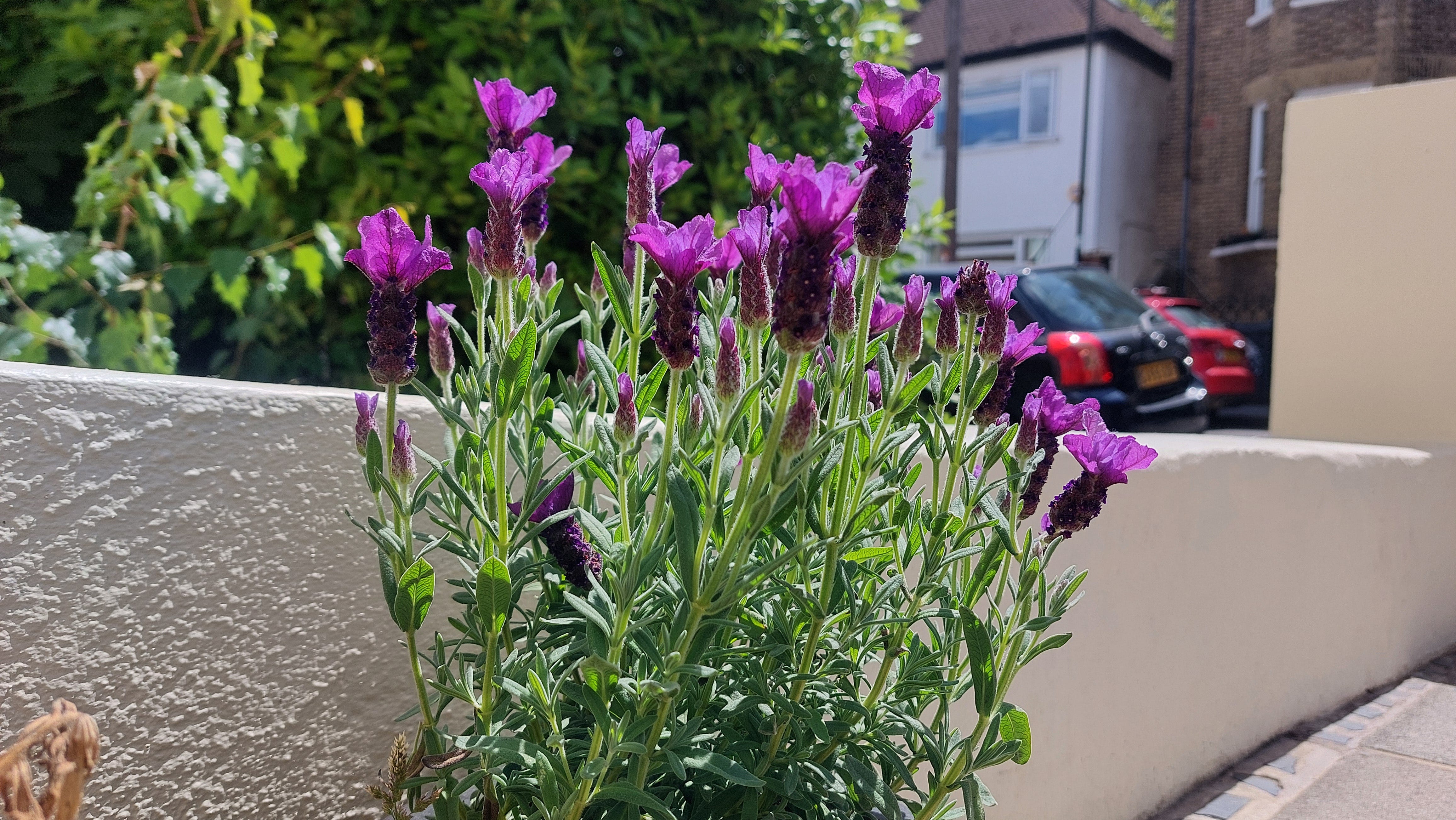
Now, every time we leave the house, I make sure to bend down and rub my fingers through the thyme or lavender (check for bees).
I hold my hand up to my face and take a deep inhale. Ahh…
This week, I’m telling the story about what happens when we take that whiff of plant.
Welcome to the third episode of my Summer series: Smell.
(If you’ve just joined us, why not inhale my previous episodes on Sight and Touch — your parasympathetic nervous system will thank you!)
Oh, and look out for me crowbarring in a world cup reference ⚽🏆
OMG: Smells Get Into Your BLOOD
Did you know this?
Those of you who did GCSEs might remember these guys:
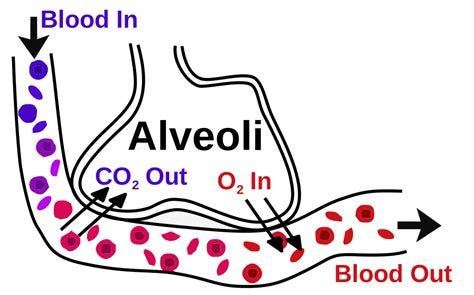
Sing it all together: ALVEOLI!
Possibly the most satisfying word in the English language, but also cup-shaped cavities in the lungs are where oxygen jumps (technical term) from your lungs into your bloodstream.
But here’s the crazy thing: it’s not just the oxygen. SMELLS JUMP TOO.
Including nature smells like my miscellaneous lavenders.
In fact, loads of different trees and plants are constantly pumping compounds (called VOCs) into the air.
It’s the VOCs (volatile organic compounds) that make the lavender smell lavendery.
When you run your hand through a patch of lavender, it’s not just air you breathe in — VOCs come along for the ride.
That smelly air makes it way into your lungs and some of those VOCs jump from the alveoli into your BLOOD.
This lavender-enriched blood then circulates through your body, and those same VOCs can be measured again in your exhaled breath.
And what gets into our blood, gets into our brain — but more on that in a sec.
First, grab your trowel. (You don’t need a trowel.)
Your Turn: Become a Sensory Gardener
So far, my challenges to you have been lowkey: watch pollinators for five minutes, touch wood for ninety seconds.
All well and good — and genuinely therapeutic — but today’s challenge will completely change the way you live your life (a bit).
Today’s challenge is to grow your own sensory garden. (Don’t worry, we’ll start very small.)
First of all: a few myths to bust:
You don’t need an actual garden. We don’t have a garden: we have a front step and a neighbour upstairs who isn’t bothered that we’ve turned it into a sensory step.
You don’t need loads of money. Money doesn’t grow on trees. Plants do. Take a look at your neighbours’ gardens. With their permission, rub a few leaves between your fingers. I bet they have a plant that smells good. Ask them if you can take a cutting.
You don’t need green fingers. The plants I’m going to suggest are some of the most robust plants out there, (mostly) built for the rough and tumble of the Mediterranean climate: sun, drought, poor soil. And if you kill them inside 3 minutes — so what? Start again.
Okay, great. Now, here’s the challenge:
Choose one of the following plants, most suitable to your situation (I’ve italicised ones that we’ve tried and tested in pots in London):
Indoors: Scented geranium, lemon verbena, Cuban oregano
Front step: Rosemary, thyme, dwarf hinoki
Sunny: Rosemary, lavender, juniperShady: Bay laurel, lemon balm
Rainy: Lemon balm, sweet cicely, mint
Oops-forgot-to-water: Rosemary, juniper, thyme, lavender
Large patio: Bay laurel, juniper, dwarf hinoki
Actual garden: Scots pine, juniper, bay laurel
Complete beginner: Mint, lemon balm, rosemary
Go out and acquire one specimen of your chosen species. You’ve got at least two options here:
Buy from your local garden centre. A fairly well established pot of mint, thyme or rosemary shouldn’t cost more than £5.
Take a few cuttings from a friend or neighbour and either (a) ask them what to do next or (b) find a Youtube video for that plant — like this one for lavender.
Proudly situate your new plant on your front step / tabletop / patio / balcony.
Sit down next to it. Rub a few leaves between your fingers. Take a deep inhale of that wonderful scent.
Repeat step 4 for two minutes every day.
If you’re enjoying yourself, repeat steps 1-3 once a week through the summer.
Your goal here isn’t the gold medal at Chelsea Flower Show. It’s to create a tiny sensory garden within arm’s reach.
For your stress levels, for your immune system and — why not? — for the bees.
How Does It Work? (The Sciencey Bit)

Nice smelling plants like lavendar, rosemary and oregano are high in chemicals called terpenes — specifically pinene, β-pinene, and d-limonene.
Scientists (not them again!) have found that breathing in these chemicals has a direct and positive impact on our stress levels across multiple measures, including, in one 2019 study, heart rate variability and alpha brainwaves.
Yep: your brainwaves get calm after sniffing plant.
On the one hand: no massive surprise — that’s aromatherapy, a therapeutic practice so ancient that Pharoahs were known to indulge.
But it’s astonishing how even miniscule amounts of these mighty molecules reduce stress in a fully grown adult human.
The chart above shows the effect of different levels of terpenes (measured in ppbv: parts per billion by volume) in the air breathed by 59 experimental volunteers.
As you can see, compared to zero (the top bar in the chart), as little as seven parts per billion already has a supportive effect on your freaking out emotions.
Seven parts per billion is vanishingly small: picture one football team (not including substitutes) in the entire population of China.
⚠️WORLD CUP CROWBAR CLAXON⚠️
Our noses are SUPER sensitive. And what you smell changes your brain chemistry.
So, go on — sniff a plant today!
Go Deeper
Huge thanks to all the paying subscribers who helped make this newsletter possible. You know who you are. Thank you. 💚
If you enjoyed today’s story, then go ahead and tell me. It’s the only way I’ll know. You can tap the heart button, write a comment, share the newsletter with friends, or simply reply to this email.
If you want to go deeper, I am in the process of putting together an 8-session therapeutic nature connection programme that will run in September and October in Southeast London.
Reply if you’d like to hear more.
‘A special and unique way to experience nature in London.’ – Julie
diwyc,
dc